
Why Being a Woman Is Simply More Expensive
By Samyukta Pai
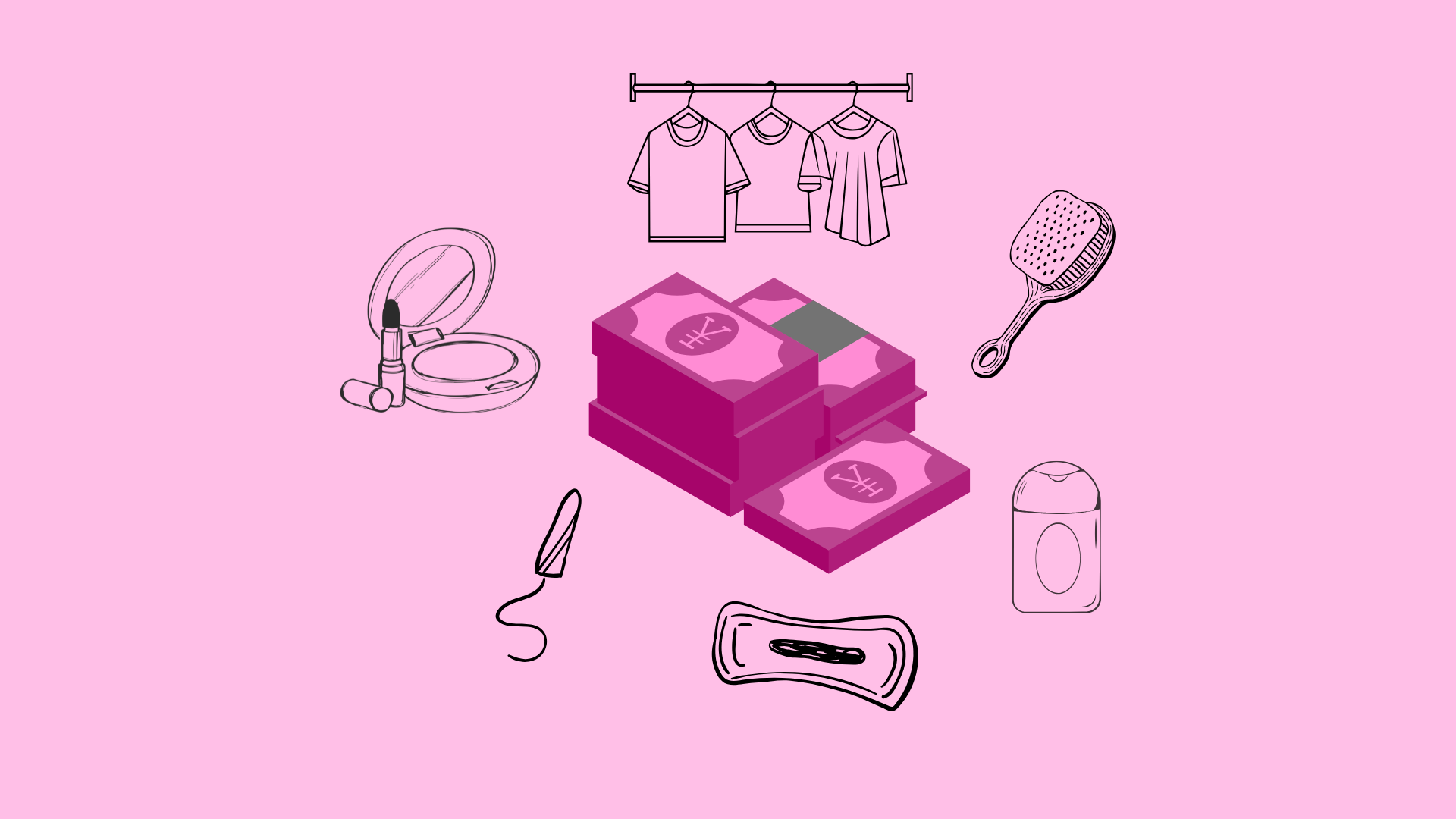
There’s a familiar belief that women spend more money than men. But why is that? Socially, women are often associated with higher spending on clothing, beauty products, and even small items, such as stationery. This isn’t about nitpicking lifestyle choices or reinforcing stereotypes – it’s about highlighting an overlooked economic disparity hidden beneath the surface of everyday consumerism: the Pink Tax.
The name itself, “Pink Tax”, holds an unfortunate irony – it's intentional, of course – but yet reflects how society continues to perceive women through a hyper-feminine lens, even in pricing. If you're unfamiliar with the term, here’s a real-life example.
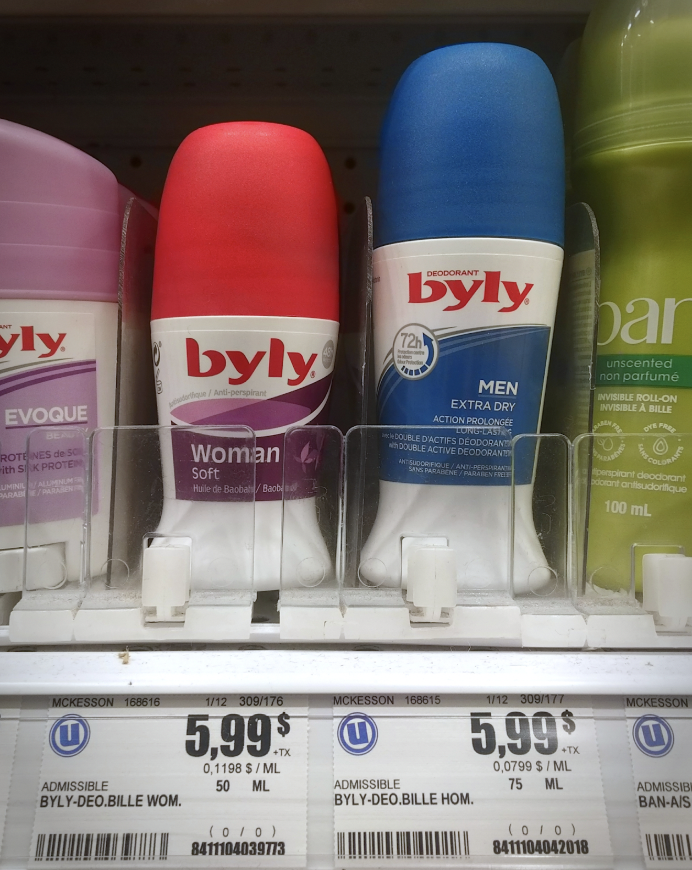
It’s 6 AM, I’m out on a run and realise I’m missing deodorant. I swing into the corner shop, head toward the self‑care shelf, and there it is: a 50ml roll‑on labelled “Woman – Soft” in pink, priced at $5.99. Beside it, a 75ml blue one, labelled “Men – Extra Dry,” is also $5.99.
The men’s version gives me 15 ml extra for the same price. On the next shelf, a similar story unfolds: men’s shampoo (400 ml) is $5.99, while the women’s bottle (325 ml) is $7.00; a 120 g men’s soap is $1.50, and the 100 g women’s bar is $2.50. Small differences in size, scent and packaging add up – being a woman simply costs more.
What you see in that shelf is not a quirky marketing tactic, but rather a reflection of widespread price discrimination. According to a World Economic Forum study, personal care products targeted at women cost, on average, 13% more than those aimed at men. A broader academic analysis found that across the full spectrum of consumer goods, women pay about 4% more per unit.
You might think, “Well, 4% isn’t much”. To that, I counter, because that 4% compounds quickly. Globally, women earn roughly 83 cents for every dollar earned by men, and the World Economic Forum estimates that, at the current pace, full gender parity is still more than a century away. One estimate for the U.S. suggests that women pay about $2,381 more per year for comparable goods, adding up to nearly $188,000 over a lifetime. When you combine lower wages with higher prices, that “extra” 4% is no longer trivial; it becomes a built-in drag on women’s ability to save, invest, and build wealth.
And it doesn't stop at deodorant. In Canada, studies indicate that by 2021, women were paying up to 50% more for hygiene products than men. This, combined with deeply rooted societal challenges surrounding access to essential feminine hygiene products – which often carry unjustifiably high prices – further exacerbates gender inequality and corrupts women’s long-term purchasing power.
According to the National Organisation for Women, the average woman spends between $18,000 and $20,000 on period products over the course of her lifetime. For reference, this sum of money is equivalent to:
A well-funded retirement savings starter account,
A business startup fund for a small-scale venture,
The average cost of a second-hand car,
And the list goes on…
During inflation spikes and economic downturns, these added costs take a greater toll. There’s also the matter of “pink tariffs” disproportionately affecting women. Economists have begun using this term to describe import taxes that are higher on goods classified as women’s clothing or accessories than on almost identical items for men. In the United States, according to ODI: Think Change, tariffs on women’s overcoats sit around 15.5%, compared with about 14.7% for men’s overcoats, and similar gaps show up across shirts, trousers, and shoes. Analyses suggest that, on average across categories, women’s apparel effectively faces a few percentage points more in border taxes than men’s apparel. Those differences look small on paper, but when every step of the supply chain is taxed slightly more for women’s goods, the extra cost is baked into the final price on the rack.
The sad consequence is that women lose out twice over. Less pay + higher costs = stricter budgets. This has ripple effects on their savings, investments, and even retirement readiness. Though the United States is the primary example used throughout this article, it does not mean that it is the worst. Instead, in many regions, including Asia, gender-based pricing remains underresearched – but early signs suggest the same pattern, and often goes further.
Well, can anything be done?
Raise Awareness
Women and men alike need to understand how deeply embedded this issue is in the marketplace.
Government action & Legislation
Some U.S. states have already taken steps to ban gender-based pricing for services, and a federal Pink Tax Repeal Act has been introduced – though it has yet to pass. Meanwhile, in many developing and underdeveloped nations, the issue of the pink tax remains largely overlooked, often pushed to the margins of broader social and economic policy agendas.
Retail Responsibility
It is essential for retailers to reassess their margin strategies; the argument that women’s products cost more to produce is insufficient to justify consistently higher pricing, especially when ingredients and functions are nearly identical. Realistically, slapping pretty, pink, flowery detailing to the top of a fully standard product doesn’t constitute ridiculous surcharges.
Back at the store, I pick up the women’s deodorant out of habit – but this time, I pause. Why should I pay more for the same product? Because someone decided that packaging it in pink makes it more “valuable”? It’s insulting to refer to it as marketing when we must deal with the fact that it is a hidden fee, used to exploit women.
And for every woman making that same purchase, it's more than a few cents. Or a 4% surcharge. It’s a small but consistent tax on our gender – one that quietly rusts our financial footing over time.
Equality in society and pay means very little without equality in price. The store shelf may look ordinary, but it’s where systemic inequality hides in plain sight. It’s time we stopped paying more simply for being women – and started acting on fair pricing as a matter of basic economic justice.
